
SISU
A Series of Epic Adventures

Tactical 16 Publishing

Available Now!
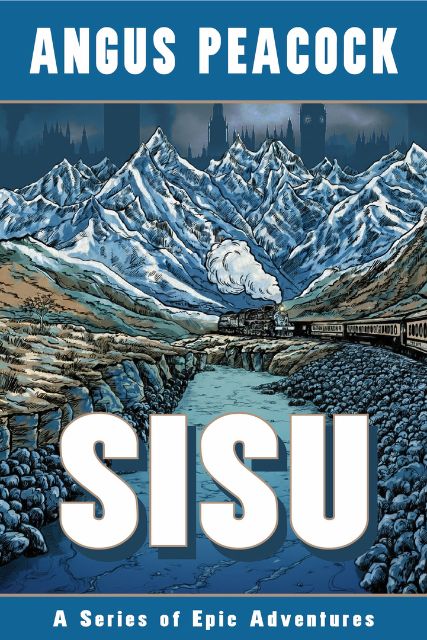
 “SISU is a contemporary account of perpetual conflict that speaks to real human challenges and how to face the unknown head on and with integrity,” said Peacock. “This story lifts readers from the flimsy normal existence into a world of high drama, suspense and love as the main character navigates countries across the globe where the rule of law is opaque and geopolitical ideologies differ.”
Peacock’s story is rooted in the Finnish concept of Sisu—a unique mindset embodying extraordinary determination, grit, courage, and resilience, especially when facing overwhelming odds. The tale follows a young man shaped by violence, corruption, and social dysfunction, yet unwilling to be broken by them. Raised amid the fallout of murder and institutional failure in “Dark London,” the protagonist becomes collateral damage in a world ruled by corrupted police, organized crime, and repression.
Forced to flee, the main character chooses to define his own destiny rather than surrender to victimhood. His escape ignites a perilous journey across Europe and Asia, traveling by train and on foot through the French Alps, Moscow, Beijing, Mongolia, and beyond. Along the way, he survives blizzards, gunfire, snatch squads, wild dogs, as well as criminals closer to home.
“Angus’ story is about refusing to be broken, no matter how difficult the circumstances,” said Chris Schafer, CEO at Tactical 16 Publishing. “This book was born from the belief that Sisu is not just surviving but catching a second wind that will propel you forward when everything else is gone.”
Read an Excerpt from SISU
SISU - Excerpt*
SISU
A Series of Epic Adventures
This is a story of resilience and realization. It is also an exploration of optimism and the human condition.
What is Sisu?
Sisu is the ability to act in the face of adversity and continue moving forward. It is a Finnish trait about never giving up, whatever the odds.
An almost mystical strength, Sisu goes beyond the boundaries of determination and grit.
It is the “second wind” of mental toughness, after an individual has reached the limits of their observed mental or physical capacities. – Emilia Lahti
Where resilience ends, Sisu begins.
If you’re walking through hell, keep walking – Winston Churchill
If you recognize any similarities between these adventures and the people, places and circumstances described within, characteristics, traits or situations, it is purely coincidental.
To all the people across the world on a journey.
Introduction
Fate determines the trajectory of our lives. In my case, an unfortunate act of excessive violence, a murder to be precise, triggered a series of horrific experiences that changed me forever. The murder was brutal and opened the door to a world of further brutality which offered two choices: move on or break down.
Move on, define my own destiny, and create a better existence.
The alternative? Be broken down by the force of a determined group of people for whom justice was a luxury others enjoyed.
I did not commit the murder, nor was I party to that. To this day it is not known who delivered the fatal blows. That said, the scars from the fallout of that experience are etched deep into my soul. I was collateral damage in an explosion that destroyed my universe; an explosion of force that concurrently destroyed all the institutions – law, education, and society – in which I was raised to believe.
In the event of emergency or pressing need, institutions failed me. The beliefs with which I was raised were found wanting when the frailty of civil society was exposed. Falling through the meshed fabric of rules and regulations that bind us together, friends and relationships dissolved into nothingness and hopelessness.
Life is a struggle, particularly if you grow up in a world of dysfunction. British society prefers not to speak to dysfunctions, even those in plain sight. “Keep Calm and Carry On” is a form of English stoicism akin to “stiff upper lip” and similar mantras that, at best, point out the national trait of being cool in the face of adversity. At worst, it points to a national trait of repressive emotion. I learned back then that people recoil in horror when the ugly underbelly of civilization is exposed. None more so than “the chattering classes.”
Those “chattering classes” are the folks who enjoy the comforts of a first world nation. The steady revenues, regular employment, and good schooling that are taken for granted if you are lucky enough not to be impacted by dysfunction or, as is the case of many, able to turn a blind eye to dysfunction. The chattering classes are a subset of society preaching outwardly about upward social mobility if you just try harder. “Pull yourself up by your bootstraps” is the mantra easily peddled by people who never have had to do that.
For upward mobility to occur, there must be downward mobility and, as I discovered, many folks would do anything rather than reach down and make room for you. At the extreme, they will lie, cheat, and steal just to preserve the sanctity of their comforts. Upward mobility is the myth, and the minute you contest the perceived veneer of wealth people will maintain a limpet like chokehold on their station.
To make significant change in your own life, you must be prepared for the hardest of contests. To meet those changes, you are going to have to take the gloves off and get bloodied in the fight for growth. To sustain those changes, you must prepare for a lifetime of challenge. Change is uncomfortable. Gains are incremental. Mobility is often unattainable.
For this reason, many folks give up, preferring to accept the status quo. Some, however, halt their own descent through the meshed fabric of society and walk a path less travelled. These are the adventurers, entrepreneurs, and social misfits who know that life is not a dress rehearsal. These are deliberate people who choose not to be squashed or accepting but spark change and forge a new destiny.
I chose to be one of those people. A dreamer by birth and a fighter by necessity.
Believing in my heart that validation would arrive through non-conformity, (an action that in my mature years could best be described as folly), I stepped out of my lane and embarked on a series of epic adventures that furthered my education and achieved some degree of enlightenment.
These same adventures took me all over the world. Like the protagonist in the books I loved to read as a young boy – part pirate, part commando, part spy – I crossed seas and mountains, oceans and deserts, fueled by curiosity and fearful of ignorance.
En route, I discovered many things. Not least of all is that business is never really what it seems, and that the law is a funny animal. While business can be hard or soft, the law is a chameleon concept which is accorded the luxury of interpretation. It changes color for country, context, and circumstance. The law protects society from itself yet is discerning about who it serves. The laws of society change by ideology and culture, and if you are far enough away from a judicial environment, the law of society disappears completely, replaced by the laws of nature, and failing that, the man with the biggest fists.
The rule of law, like many things in modern life, is essential; equally, like many man-made things, it is also fickle and malleable.
I was ill equipped for my journey. Survival required that I suck every ounce of new knowledge from each experience. Learn fast, analyse with alacrity and apply immediately. Reflecting deeply, often disregarding conventional wisdom, I would push boundaries as far as I dared, sometimes at the risk of my own life. My intent was always one of discovery; my guiding regulations were to be law abiding, (even in the face of criminal intent) and be pain relieving (by not being the architect of someone else’s pain). The OODA loop – Observe, Orient, Decide, Act (something I learned later in life)- became part of my intrinsic life philosophy which carried over into a coaching philosophy that includes “Plan, Do, Conclude, Review.”
My family, like many British families, is a hybrid of cultures.
Migration is in our genes. We are Anglo-Scots on my father’s side; my paternal grandmother was descended from Highlanders, poor folk who were economic migrants to London. Via the Lime-house docks, for centuries the entry point of commoditized folk, they followed the path of French Huguenots, European Jews, African Slaves, Colonial Indians who got their first taste of London through this part of the East End.
Gran and her sisters married into English families, survived two World Wars including rationing, the Blitz of London by the Germans, and many other hardships. They all smoked many cigarettes, drank whisky or brandy, fought like cats, and lived tough lives into their seventies and eighties. The Anglo side of our family were farmers, likely descended from Dutch immigrants who drained the fen lands east of Cambridge. Tough folk with a history going back to horse drawn technology through the transition to steam engines and into the management of diesel machinery.
My father is the most vehement of Englishmen. Feasting on the stories of Empire. He donned the uniform of “Law Enforcement” from where he could forcibly preserve his Anglo-Empirical view of the world. My grandfather, also a policeman, died in a “Dark London” that was smashed by German bombs. He died on the “domestic frontline,” where a civilization bent under Nazi bombing raids, sometimes broke, and resorted to dysfunctions never publicly, or even openly, discussed. My elder brother, following the footsteps of our father and grandfather, joined the ranks of law enforcement professionals, cementing a family heritage across three generations.
My mother was different. An economic migrant from Finland, she worked as a Red Cross nurse and, for a short time, an au pair in London. Introduced to my father through mutual friends, she remained in England and settled in London. Finnish people are rare, we seldom notice them as a country or a society, yet their impact on history has been significant thanks to their own level of tacit stoicism. The veins of this national trait run even deeper than any other stoic form of which you may have heard.
Finnish stoicism, Sisu, is the product of a nation occupied and reoccupied over history by Sweden and Russia. Finland eventually gained independence in 1917. Shortly thereafter, the Finns faced down the might of the Soviet Russian military machine. Stalin’s attempts to annex their country were fought to a standstill by men and women protecting the independence of their young nation. Finland, abandoned by the allies, fought alongside Germany on the Eastern front in the cruellest of cold temperatures. Many Finnish families were broken by the conflict, annexed by the Russians in lost territory, or simply disappeared. In the village where my mother lives, a statue of an unknown soldier is dressed in a German stormtrooper uniform.
He overlooks the graves of the fallen. The names of the fallen in this tiny village are Finnish, Swedish, and German. In other villages, some are English. These were freedom fighters who fought against Russian empire building. Authentic unsung heroes who received no coverage in the stories of Hollywood.
Like many of her country folk, my mother is stoic and resilient.
My father divorced my mother in a vitriolic and scarring battle of wills, winning custody of his children. Like many men, he then excused himself from the responsibility of upbringing, which he bestowed upon my grandmother, the Highlander. He was not present emotionally or mentally.
Like many Finns, my mother endured stoically and was determined to be present, even from a distance. She always made time for phone calls, cards, and small gifts even when she could not be close to her children. She took interest in our education, hobbies, and music to stay connected and relevant to my brother and me. As a young boy, I did not always offer sufficient recognition of, nor grace for, the determination and the disciplines of my mother and my grandmother; that said, thanks to them, I grew up with respect for all people, and an appreciation for the resilience of women in a man’s world.
With no male mentors in my formative years, the influences of my mother and grandmother were defining. Both my grandfathers had been killed at a young age, and my father was a law unto himself. To become a real man, I learned about courage, stoicism and resilience by observing my Scottish grandmother and my Finnish mother. Their traits illustrated ways to behave that were missing in my male influencers. What mum and gran lacked in traditional male knowledge was supplemented by the extensive reading of comic strips like “The Beano”, “Tintin”, and the war focused “Commando.” Such reading material laid the remaining foundations of my early learning. Hungrily, I devoured these comics and others like them, creating a dreamscape with which real life could never compete.
The ability of both mum and gran to demonstrate generosity and kindness against the odds, even when they had nothing, remain with me today. Spiritually, thanks in part to these matriarchal influences, I matured more with a sense of being Finnish or even Finno-Scots than English. This is not cultural misappropriation. This is the reality of British-ness for many folks. Britain, after all, is a hybrid nation of jumbled families and an agglomeration of cultures. Personally though, the values of solidarity, kindness and love, as well as an appreciation of nature, are all linked to matriarchal influence. Whereas Englishness, thanks to patriarchal influence, became attached to fear, anger, and hubris. The nationality of righteous indignation. My internal conflict was real and ultimately became the fuel in a journey of discovery. The discovery of identity, purpose and knowledge.
This story then, is a modern novel. It is a story of growth, adventure, and struggle that I share with you in the hope that it brings enjoyment, engagement, and some form of education.
This is also a story of integrity and humor in the face of adversity.
It is a story of resilience.
It is a story of Sisu.
- Trans Alpine
Year of the Rabbit
Rabbit people are elegant and courteous with keen senses. They are surprisingly savvy in business and finance. They adore abundance and cannot tolerate boredom constantly hopping from one excitement to another. Gentle in nature, they can be jumpy and cautious, yet analytical and diplomatic.
Rabbit people need to learn how to manage their emotions to survive.
The French Alps
Am I going to die? Possibly, if I don’t get my act together.
The snow bites my skin, as the blizzard whips my trembling body. If I make a wrong decision now, the possibility of death becomes a probability. I have cheated death a few times. Not by choice but by circumstances, some of which were self-made, others of which were imposed. I am not sure if I can cheat it this time.
What are my choices now?
Standing there, semi-naked, in white out conditions, I could climb up to the peak of the mountain where there may be a refuge with food and drink. This is France after all, and a well-stocked refuge is not uncommon on their mountain tops. Alternatively, I could head down to the road, invisible beneath me, which might be the safer option. Wearing summer hiking gear, a vest, shorts, socks and boots, I carry a few provisions in my rucksack. Half a baguette, a small hunk of cheese, and a bottle of water for food. A few extra clothes for warmth and some basic camping gear for shelter. It doesn’t sound like much but collectively all these items weigh about twenty kilograms. Not an insignificant weight to carry on a mountain hike which is now entering day five. Or is it day four? It is so cold now I cannot remember when I started or where I am headed. Here I am, stuck in a blizzard, contemplating my own end and, even with nobody around, feeling stupid.
I am embarrassed at a predicament which could lead to my untimely death.
This is not the first time I have faced death; or at least the threat of death. I know death as a continuum of existential threats ranging from raging storms in the South Atlantic and raging men in London’s pubs. I am still surprised that the world finds me intact and fully fit. Internally though, I struggle with a turmoil perpetuated by a search for peace of mind.
In the heart of the French Alps, at the mercy of nature’s fickle friendship, I once again face my potential demise, though less violent than some of the previous encounters. That’s one blessing.
As a natural optimist, I like to count my blessings.
“Onwards and upwards” says the devil on my shoulder, tempting my ego. The devil wants me to forge ahead, peak the mountain, and be a hero. That would be a story to tell in the bars and brewhouses.
The temptation is real.
The angel, on my other shoulder, is a counsel of caution and wisdom. She recommends descending. Go find shelter and improve your chances of survival. “Funny”, I think in the moment, “how devils are male, and angels are female”. That might be my own implicit bias and possibly a product of upbringing. Clearly though, there are still some sparks firing in my synapses and decisiveness is not beyond my current capability.
With renewed optimism, I know two things with certainty: there is no point changing clothes until I find shelter and can dry my body, and this is no time to question my own life choices. If you’re not moving, you’re dying. I am already shaking, almost uncontrollably. As my body temperature is plummeting, it’s obvious that I have to get going.
Thinking is hard; hypothermia is harder.
Dark London.
Smash!
The plate glass picture window explodes into a million little pieces. A fire extinguisher is the missile which caused this offense. It has done a thorough job. Inside to out or outside to in, the trajectory of the fire extinguisher is unclear. The glass splatter will tell that story later, but once the yelling melee of scrambling people clears the decks I see carnage. Either way, it is going to be expensive. The artwork on the window was hand painted and cost a few hundred pounds. The glass is easily another few hundred. That’s most of a grand gone right there. The remaining costs include shattered furniture, glasses and, destroyed inventory. Then there’s the emotional cost of lost business until the dust settles. The final account will easily be a few grand plus extras.
More glass shatters as people try to clear out. In the panic, clenched fists rain blows and flashing blades draw blood. Welcome to “Dark London.”
The world of my early twenties – in the territories between Crystal Palace and Croydon – is a conflict zone. This is Dark London, where the destruction of trusted societal institutions has created a war between the yin and yang of my own philosophies. The struggle between Light and Dark is reduced to a binary state: the exploitation of stupid people (as upward mobility feels unattainable) vs the wrestle with instilled values (often spoken by men yet walked by women). This is further distilled; temptations vs rewards. Or simply put, profit over enlightenment.
I exist on Maslow’s bottom rung, earning enough money to pay some bills but not enough to feel safe.
Friday nights in the southeast of London are volatile, complex, and uncertain. This is the arena where a hard world pauses, refuels, and refreshes. The punters are mostly local, but others come down from the West End or the southwestern boroughs looking for action and an escape from the sanitized post codes of less colorful sanctuaries. Whilst outward appearances have changed, the fundamentals of the human condition remain the same. And just like in Roman gladiatorial times the desire of the chattering classes to see the big fight have not gone away. And so we say to those modern gladiators:
“Those who are about to die, we salute you!”
Some nights it is quiet and there is opportunity to speak with customers or enjoy the trade. Yet, in those quieter moments, there is also the threat of pending anarchy. Silence here is a rare commodity, and peace does not last for long. If this was ancient Rome, then southeast Londoners are gladiators in the arena, fighting for survival; they are also decompressing in their dysfunction with pints of lager, shots of spirits, and slivers of substances that we know but do not see. This substantive cocktail is the catalyst in a countdown that will, at some point, trigger a round of flailing fists, flashing blades, or worse. The darkness of London stretches back through the novels of Conan-Doyle, Dickens, and Shakespeare. For centuries the fuel in the fight has been “entertainment after dark.” This is not a new concept and when it all kicks off, the collateral damage is significant.
The citizens from more affluent post codes are the spectators in this Colosseum. They bring the cash and make it rain. Looking for inked arms, mean muscle, and bloody engagement, they drink from the top shelf looking down upon the huddled masses. Being here is edgy enough, but the prospect of bloodshed adds a frisson of excitement to an electric environment. I must assume they are here for the entertainment. The booze they drink is available up West, as are the hostelries, which are also cleaner and generally safer, which makes them more boring perhaps. In rare cases, one of the local warriors gets to walk into the night with a princess on his arm. Whatever the motivations and desires, whatever the expected outcomes, Friday nights in the southeast boroughs provide rich material for stories that fuel the fires of Monday morning chats over coffees.
And if Friday night is dull, there’s always Saturday night for a rerun. And failing that, good gossip feeds the mythology of an escapade undertaken. After all, never let the truth get in the way of a good story.
Drinking and fighting are good for business. Up to the point when a bomb goes off.
“Are you not entertained?”
But let’s come back a couple of steps.
I work here for my father, his buddies, and a bit of coin. The price of family loyalty means I get to manage their bar and defend myself against local gangsters who, it is rumored, want to take over the venue for their own criminal purposes. I’ve been in plenty of bars around the city and beyond. I have also worked a few. It is not my choice of profession, but it is an easy way into London life. In the absence of career opportunities there’s always pints to be pulled and drinks to be drunk.
This is one of the border bars.
British bars are cultural hotspots and often more than mere drinking dens. Like mile markers on roads, they are signs indicating destinations and directions. Some are more polished than others. Most are weather beaten, bearing the scars of history. Others are border markers indicating whose territory you are now entering. The pubs and bars of London have a history going back hundreds of years and you best be careful where you set foot, particularly if you are on the edge of someone’s territory. My bar, situated on the eastern edge of a western district, on the border of Palace turf – Crystal Palace that is – is feisty with live entertainment tonight. Palace must be playing at home.
This is the second visit in as many weeks by the local robber barons. They want this property as part of their turf and their distribution network. Today’s violence appears mindless but is pre-meditated. These are warnings of their power rather than mutually assured destruction. They want to retail their product in the bar, but papa and pals said no. They, the business owners, casually mention the situation to me in passing. A warning, without HR representation, that I might want to be aware of pending trouble. At this moment in time, I am stuck at the back of the back bar where there are no exits. I wait calmly. As the bodies thin out and the business settles down, I will be able to get out front. The cool night air flows through the broken window.
The hyenas who scavenge for the robber barons are servicing the crowd. Manhandling bodies, pushing people around, and intimidating those who resist. Resistance is futile. One of the hyenas is close to me. T-shirt, jeans, wiry lean and mean, he has his hand in his jacket. I can smell him from here, sweat and cheap scent. He is eyeing me up, ready to attack, made brave with his pack close by. Adrenaline pumps through my body. Time slows down, and I wiggle my toes ready to strike. Hit and run is the only way out of here. Otherwise, I am trapped in the back and could be carrion for the whole pack. His hand starts to pull out from his jacket. I can probably land one blow before he retaliates but I eschew violence. Even in the face of criminal intent I wish to avoid lawbreaking behaviors. It is stupid, I know, but it is a code by which I have chosen to live. Not a code of pacifism, just a code whereby violence is the absolute last solution to any perceived problem. It is hard to maintain this code, which has become a real discipline and, as the boundaries of behavior are stretched, so is the respect of my own code.
These guys are mean. Dirty cheap muscle hired to help a faceless evil, they are amped on coke and maybe pills. They will wreck the joint in exchange for a few lines and some free beers. They are not worth fighting. When you wrestle with dogs you can guarantee that you will be bitten and probably end up in the shit.
Taking the high road is not easy, also I don’t want my mom to know I’ve been fighting.
I am genuinely scared. Breathing slowly and deeply I work hard to remain calm, waiting for an exit opportunity. Do not panic, otherwise, this will not end well.
The hungry hyena opens his jacket. I see a dark shape. Is it a blade? It looks like a gun. I can’t be sure in the half-light. I just know that either option will be painful. This little piggy is tooled up. This situation is messed up.
Then the plink, plink fizz of gas fills the air.
Ever the optimist I like to count my blessings, thank goodness for that bomb. Fast on the tail of the fire extinguisher, a CS gas canister skids across the floor bumping up against the guilty red cylinder that smashed the window. I hate being gassed, it hurts. This is not the first time. The gaseous agent spews out across the floor and will soon fill the space. The spew is further agitating the excitable audience who, eyes wide open with adrenaline pumping, are sucking down large gulps of air tainted with tear gas. The impact is maximized. The crowd starts to scream and kick its way through the window and doors.
I feel the gas bite my flesh as it crawls up my body and leaves its residue on exposed skin. This malevolent ghost traces thousands of indelible scars like the poisonous stings of so many wasps. Bodies crushed in small spaces are trying to escape the pain and the hyena grimaces, and leers at me. I assume he’s on coke, rather than tabs or anything stronger, as the gas seems to be hurting him, too. Coke gives him confidence to carry but hopefully not pull the trigger or run his blade into my body.
The tear gas hurts, yet it offers a reprieve from imminent violence. I embrace the opportunity it presents to exit this moment of theatre.
The clean handkerchief in my pocket is old-fashioned and applied over my face. It is a simple measure that stops the residue entering my nose and mouth. My eyes are stinging, but I know not to rub them.
Time to move.
Incapacitated by gas, the lean meanie, bent over with eyes streaming, is less menacing now. Whilst the effect of terror is writ large among the paying customers, in my case the gangsters have scored an own goal. Although it is unclear if I am an intended target or just part of the collateral, the tactic gives me time and space to get out. Unwilling to wait around and find out more of their intentions, I move away from lean meanie towards fresh air.
One bomb has been enough to shatter this evening’s crowd and disperse the people. The spectators got their money’s worth, though, and Monday morning coffee time gossip will be spicy with stories now.
I know not to rub my eyes but can feel burning residue on the back of my hands, seeping through the pores in my skin working through the powerful adrenaline that is keeping me alert.
Pushing people aside, I step around choking and bleeding bodies, past the weeping faces and out through the broken window. I cross the road into a safer darkness. Stepping on to new territory and in the lee of darkened shop fronts I can finally breath cleaner air. Wearing dark clothes, standing still in dark shadows, my safety is relative, and I watch the street theatre continue to unfold.
Shattered glass twinkles. People disperse along with the gas as the bullet heads smash a few punters and a few other windows before they disappear. By the time that police, fire, and ambulance services arrive, the crowd is mostly gone, and they are left with street detritus and a handful of broken frightened people to manage. Hugging the shadows, I am sure that the robber baron gang is gone. Stepping out onto the pavement I turn away from the trouble and walk up the hill looking for my car. Parked in a nearby safe zone, I still scan the terrain for threats. Safety is not guaranteed on “live entertainment” nights, but I think the bullet heads are whooping it up in the next pub now. They are fifty meters down the street in the opposite direction. There, they can celebrate the anarchy, with a fistful of dollars and a pledge of allegiance to the man with the biggest fists, whoever he may be. The distance of this pub is far enough for plausible deniability should curious police officers come around asking questions.
Safety is relative. Fifty meters is a long way on a London street. Standing still, I take a final look over and around the car, unlock the door, fire up the engine and pull away. I have suffered no major damage, but this is wearing thin. These safety routines are necessary. The car is a trap after dark, and I regularly change locations. Breaking up patterns of behavior is a habit now, an essential skill to remain free from harm. Sadly necessary, I learned the skill from reading spy books by John le Carre. Espionage stories about bad actors in other peoples’ territories. It never occurred to me that I would have to use these techniques in my own back yard.
I am trying to earn a living and find my way in life. This is too spicy and was never really part of the plan. London is a great city, with an amazing history and culture; a great place for earning and learning. “Dark London” is its evil twin, the underside of that history and culture with a great capacity for struggle and violence.
I eschew violence naturally, except as a last resort; family loyalty has plunged me into this heart of darkness, which I resent as I am stuck here now. Stuck in a London which may be going into, or coming out of, another recession, I am not sure which as recessions seem to be almost as common as IRA bombing threats.
I count the days until I can leave and find a better place.
…
The Old Gangster leans in. He’s bigger than me, not taller, broader. A massive chest and fists like hams are the signs of bare-knuckle fights. Part of a former life where he had to fight to survive. His tattoos are etched in a faded prison blue. A fork tailed songbird, rests on the “v” of forefinger and thumb. He’s done time inside. The swallow is symbol of being locked up, or “doing a bit of bird.” Etched with blue ink and a blade, I have seen these tattoos before. Not just around here. I also saw them when I was younger. Administered in school with a sharp pointed compass, they were badges of honour for a subset of the student population. They are not my cup of tea; my skin is tattoo free.
OG has tattoos on his fists and forearms. Maybe on other parts of his body. He’s built like a beast, unsurprising for a bare-knuckle fighter and one-time apprentice butcher. Training back then was unsophisticated, mainly involving machetes and cow carcasses. High school was irrelevant for there was money to be made in butchery (either in the ring or in the shop). School is for academic learning, which is the wrong kind out here, where learning for the purposes of survival starts at an early age. The toughest survive using street wisdom. Academia is a luxury concept.
His backstory is impressive and daunting. People like the OG, as seen on T.V., are not meant to be real. They are meant to be characters in movies and shows where the good guy always wins. Sat here in front of me, he is very real. Larger than life and twice as wide, the OG fills my whole field of vision and can easily capture my attention.
Even more impressively, the OG can do business math in his head. He teaches me numbers at high speed – fast calculations that help you survive and keep you alive. The streets are his market and, in that world, anything can be bought or sold.
The OG captivates my young mind. Unlike the folks of social standing who have influenced my life prior to murder, the OG is authentic. The genuine article. His massive frame fills the social void in my world.
He is a product of the post war baby boom; the OG has seen many things and fears nobody. Except maybe the Russians. But that’s another story. This is our story:
“You’ll be alright Angus. From our side of the house that is. You’re trusted to tell the truth. Stay square and you’ll come through. Ever since my old man came back from Crete our type has been on the wrong side of the house. Killing Germans for King and Country didn’t make our lives better. The people who unleashed the dogs of war, made good use of this community. At the end they just wanted us to go back in the cage. We tried to live normal lives; some got a ribbon from the King but there was no real reward for “blitz spirit” in the aftermath of war. Everything was broken. The city was wrecked.
Southeast London is full of characters. Gangsters and survivors like the OG. History books celebrate the end of the war, yet nobody speaks to the destruction of society and the struggle to rebuild the boroughs and buildings. The OG’s father served in occupied Greece. Living in bushes, eating berries by day, he would emerge at night to spear the Nazi occupiers and push them off cliffs. The precursor to special forces warfare, theirs was a glorified industry that rarely speaks to consequence. You don’t read about that in the comic books or the history books.
“We put the knives and guns away. Went about our business. The business of survival. They trained us to live like animals, to fight and to kill for the love of country. For freedom and independence. And, not for the first time, when the people came home, the officers got the bank jobs, the government positions, and the industry accolades. For the rest of us, they tried to put us back in the box. They wanted us to be a civil society but brought the fight home, to squash us down. The thing is, once the cat is out of the bag, you can’t put it back in again.
I believed him then, and some of his teachings have proven to stand the test of time.
Belief is my weakness. So is trust. These two attributes make me vulnerable and, even in the face of contrary evidence, I want to believe what people tell me. All people. I take everyone as I find them as I find the alternative to be horrible. A world of distrust, cynicism, fear, and hatred is a colorless world without hope. In spite of prejudice it is important to believe that people fated by birth, are intrinsically good. This is a principled foundation of my own behavior which can be painful to maintain.
Also, I have no choice now. There is nowhere else to go for help, and he is authentic. Speaking truth to reality, the OG is the most genuine male mentor I have known for many years. This is a new experience, and I am cautious about the lessons learned. But where else do I go? Once upon a time I could go to the police. That is no longer an option. The waters are muddy, since the murder; some are even poisoned, and it will take time to find clear water for I am not sure how to navigate this world. After all, how do you tell a policeman that you need protection from other policemen?
What about a doctor?
I am not ill; scarred, yes. But I sought help from a doctor, only to be pushed away with a rebuke. My problems are imaginary, unbelievable for one so young. Yet they are very real to me, and I know enough to understand I am not equipped to manage life on my own. The return for being vulnerable though is a rebuke. Judged for being young by a member of the chattering classes with a shortage of life experience. What does this doctor know? I came here for help, and the offered solution is a prescription for anti-depressants to help my imagination and to suppress the pain. No better than a drug dealer, the doctor offers an escape from reality and no advice on how to rebuild your life in the aftermath of destruction. There’s no medication for that. Unbeknownst to him, the doctor seals my fate and that of all institutions.
Leaving the doctor’s office I realize that my last light of hope in societal institutions has just blinked out. As I walk alone up the road, the pain of loneliness sears a hole in my heart. I am totally alone now. Nothing and nobody matter anymore, just survival. It is from this day I become an observer in my own life. I exist outside the shell that is my body and rarely engage on an emotional level with anybody. Connections lead to trust, trust may lead to love, love and trust combined are the enemies of truth. As I cut loose from all acquaintance, I realize that I can stay sharp mentally and physically. It is a chilling realization, but it works. The preservation and protection of self is in the cold world of disassociation.
What about a lawyer?
I have no money, nor have I committed a crime. For as long as I have known, the law is administered by men in uniform. Lawyers are something you see on T.V. generally working for the well-heeled. If I needed a lawyer, I wouldn’t have the money to pay for one. There is a system out there somewhere, the Crown Prosecution Service maybe or a similar organization, that is supposed to help the vulnerable. I don’t know how to find it, nor who to ask for help or guidance. Fundamentally though lawyers fall into the same resource pool as doctors now. It is highly likely that their response to my vulnerability will be similar, exacerbating the shame of my current predicament, and so I will carry this burden alone.
What about family?
They are mostly gone or scattered to the four winds. My grandparents are dead. My mother, a foreign émigré, lives several hundred miles away. I cannot share with her my current predicament. This is my fate. She knows something is going on, but she has suffered enough pain as a policeman’s spouse. Forced out into the cold, thanks to decisions by divorce court judges, she has been separated from her children in a fight that my father cared only to win, by any means. My brother is a serving policeman, and it would be wrong to solicit his assistance. I believe, rightly or wrongly, that we are tainted by sins of the father, and it would not be right or proper to mix my brother into this affair. My stepmother and youngest siblings are stuck in the middle of the very same predicament, doing their best to survive the onslaught. They have no bandwidth or capability for support.
What about friends?
I thought I had many but, in this new world, they seem to have gone cold, too. The human condition in action. Friendships are fickle and fragile, particularly when you are in real trouble. I do not really know who to ask for help nor for what help I might be asking. Feeling alone, my friends seem very distant now. This is my perception and perception is reality. Why would they have any concern for me when their perception is that I am an accessory to something they do not want to be around. Only one man reaches out. A Navy guy who has seen hardship provides support, guidance, and a friendly chat in my hours of need. He’s seen struggle, bears no ill will and suspends judgement. There’s a couple of others like him, but I cannot pull on them forever. It’s just good to be around them in the bar or after a rugby match where I get a temporary reprieve from this nightmare world.
Alone in the dark mostly, carrying a triple burden (protection of my own innocence, the conviction of truth and the protection of family), I strive for validation at work, on the sports field, and in society, yet little changes over time. The social construct requires that you stay in your lane, which means there is no way out, and upward mobility is not for me. In this topsy turvy world, where all my institutions – education, law, and the church – are broken, merely flimsy products of the chattering classes. Full of righteous contradictions, these are places where the chattering classes stay safe in their sanctuaries, and I am left unsupported, navigating a new world where there is no meaning, and trust has vanished.
Where old relationships are flawed and new ones impossible to maintain, I learned there is always hope. My dog Oscar brings that hope in the form of canine loyalty and playfulness. Outside of the OG he is my other mentor and the remainder of my support network. Oscar represents a gentler aspect of life with a form of empathy that I feel but do not understand. The OG represents the harsher realities of the world and shares truths hitherto untold about social constructs and the attributes of power. He shows me respect, mainly because I fight my own battles. In addition, we are both aware that my testimony puts him in a place and time that undermines police evidence. My statements made to investigating officers present obstacles to the swift conviction that they are seeking and which; therefore, bring a world of pain down on my head.
This is my actual crime. There is no place for honesty and integrity in their world. Intimidation is their method. Everyone is guilty until proven innocent and I am an obstacle to progress. Young and naïve, I believe in truth and integrity. Weirdly and, in contradiction to my upbringing, the OG is the representation of those values. The policemen are not. I am not a suspect in their investigation, that has been made clear. Nevertheless, I am an obstacle to progress, and they intend to crush all obstacles. That has also been made clear.
The OG and my father have been arrested and released. They have been held in prison cells, interviewed aggressively and doggedly pursued. When they are restrained or out of sight, police officers seek me out determined to bend my will and rewrite aspects of history.
Thanks to my version of events, I have been stalked, threatened, cajoled, and tracked across town, all to force a change of opinion, to rearrange the facts and to give the police what they want. A few sentence changes here and there, a couple of time adjustments and location alterations will suffice. “Come along now Angus, you know it makes sense. We’ve written it for you anyway. All we need is a little signature here and it all goes away.”
The language at the beginning was soft and cajoling. Friendly and encouraging. Nevertheless, it was intimidation in the form of grooming. What I know is that I don’t know what I don’t know. If I do what I am told by the police, an autocratic rule I have lived my life by, then the OG and my father may be off to jail for the murder of their business partner. This does not seem right when I am being coerced to pen statements that would contravene my life principle to respect the rule of law. Instinctively, I know that perjury is bad and if I lie in a statement for the police, then they control my narrative. So, I can obey the police – like I have been brought up to believe. Or I can disobey the police and respect the rule of law, which I feel is the strongest priority.
A Hobson’s choice. Play their game and have no life except under their control. Or do the right thing and have them destroy my life through intimidation and worse. I choose to do the right thing, not fully realizing the extent to which these people will go.
The pressure is real and heavy and singular.
I trust my gut and stick to the rule of law. I will not lie in court, nor in testimony, which puts me at odds with the policemen who regularly visit our house. It is the right thing to do. I imagine standing in front of a judge, swearing truth on the bible, knowing that I cannot lie for anyone. Trapped between might and right, the conflict is real. So is the pain.
What a mess.
Life as I know it is over. There is no coming back from this. When the OG has been released, he tells me what’s occurring. Often in loco parentis, he remembers me when my father is absent.
Yet, there is a quid pro quo. The OG teaches me how to survive “Dark London.” He teaches me what he knows about surviving the odds, after all he learned to survive at a young age. It is a brutal business school with a vertical learning curve on cost, value, and consequences.
Quid pro quo is new to me.
In business and in politics, it is an exchange for goods and services.
Business is all about quid pro quo.
And London is all about business.
The OG delivers and in return, I tell the truth and pay the price The world is frightening and sometimes painful; sometimes his umbrella opens for protection but mostly I must weather the storm alone. In the jungle that is “Dark London”, he knows who’s who in the zoo and is respected by them. This zoo is busy; business is costly, and exits are hard to find.. People have been burned. Others are out of pocket. A few others are also in the pocket of the extended web of vendors, suppliers, and facilitators that keep the zoo running. In this zoo, there have been actions and there will be consequences.
Thanks to OG though, his side of the house will leave me alone.
Shame that doesn’t go for the men of law.
My father’s side of the house.
*Advanced reads (excerpts) do not reflect the interior of the printed copy. At Tactical 16 Publishing, our professional graphic artists create beautiful interior designs with attention to every detail, making the printed copy a work of art that is easy to read.
16 reviews for SISU
You May Enjoy These Books or Services as Well
Tactical 16 Publishing specializes in working with authors in the armed forces, police, fire, and rescue communities.
Get The Latest News
Subscribe and get the latest news about Tactical 16 as well as new and existing authors and their books. Learn how to get:
-
- Signed copies of new releases!
- Free Tactical 16 Swag!
- Signing party notifications!
- Advanced notice of upcoming releases!
Emma Kate Jones –
What a fantastic read! I couldn’t put this book down. From the very first page I was completely drawn into Angus’ life story. Knowing it’s an autobiography written by my distant cousin made it even more special, but it’s a book that anyone who enjoys true-life stories would appreciate.
Angus takes you from a very harrowing and traumatic childhood through an extraordinary life filled with adventure, travelling to places including China, France, Italy and Russia. Every chapter had me wanting to read just one more.
I laughed, I felt emotional, and there were moments that genuinely brought a tear to my eye. The honesty and warmth of the writing make you feel as though you’re right there, experiencing everything alongside Angus.
This is a beautifully written, honest, heartfelt story of resilience, courage and making the most of life’s opportunities. I would highly recommend it to anyone who enjoys autobiographies, travel and inspiring true stories.
A brilliant first book—I thoroughly enjoyed every page and can’t wait to read the next one!
Julie K. –
Firstly, I have to say that the adventures themselves certainly delivered excitement and tension. The bounty hunting episodes, driving a Porsche 911 through the streets of London at high speed and riding on horseback while being chased by dogs in Mongolia, all brought a real sense of thrill and danger to the story. These moments gave the book a real pace and energy, making it difficult not to be drawn into the experiences you were sharing.
Beyond the excitement it was your thought process that fascinated me. Whether you’re caught in a blizzard in the Alps, facing violence in a bar, tracking down fraudsters or navigating a tense situation in China, you write with a level of calmness that I found incredibly engaging. Rather than focusing on the unfolding drama, you invite the reader into your mind, allowing us to understand how you assess risk, control your emotions and make decisions under immense pressure.
What really stood out to me was your honesty. You never try to make yourself the hero of every situation. Instead, you admit when your ambition has clouded your judgement, when you’re frightened, and when you’re questioning your own decisions. I found your reflections in the Alps especially powerful, when you recognise your own pride had initially made you want to continue despite the danger. Equally, in the bar your admission that you are genuinely scared, coupled with your determination that violence should be the last resort, made you incredibly relatable and authentic. This made me feel connected to you as a narrator throughout the book. (Click Here to Read the Full Review)
Connor H. – Dentist –
“Dude, I haven’t been able to put your book set your book down. Between Porsche 911 and Mongolian Steppe horsepower, I find myself revved up and reading some blend between Erik Larson and William Least Heat-Moon, while this fantasy train full of characters drops you off into China. Absolutely bonkers man! This book needs to be read by the masses!”
Julie K. – Nurse –
“SISU is far more than an adventure memoir. It’s a fascinating insight into Angus Peacock’s thought process and the principles that guide him through extraordinary situations. Honest, inspiring and deeply thought-provoking, it’s a book that encourages you to reflect on your own life long after you have turned the final page”.
Sue Ossmann –
I had never heard of SISU before this book, and I really loved seeing it explained and applied to many different situations. Its not only for life-or-death situations, but for the thousand little struggles in life along the way.
I really enjoyed the series of epic adventures both great and small, as well as the colloquial vocabulary appropriately inserted. You really can picture the sights, sounds, and atmosphere of the locations. Very engaging, I am looking froward to the next installment!
Patrick Kincaid: COO and Consultant Founder, Biotech and AI Industries –
SISU: A Series of Epic Adventures hurls the reader into a world where the only rule is simple: refuse to break. Drawing on the hard edges of broken institutions, military life, police corruption, and brutal nature survival, these stories drag the reader through a dangerous, “Dark London”, across the French Alps and Europe to Mongolia, before finally collapsing into a burgeoning, volatile China. The journey tests not only courage but the costs of clinging to one’s own moral compass; this is endurance stripped bare—writing that is raw, relentless, and impossible to walk away from.
Gerro Prinsloo –
I’ve known Angus for many years and heard many of these stories first hand. I highly recommend this read, it is almost unbelievable that someone lived all of this!
Johan Botha –
A Testament to Human Resilience and the Power of Mental Toughness
Reading this book felt less like consuming an adventure story and more like walking alongside someone who has deliberately chosen the hard road, again and again, to understand himself. Angus Peacock doesn’t just describe extreme environments or difficult journeys; he invites you into the mindset required to survive them. At its core, this book is about sisu: the quiet, stubborn resolve to keep going when quitting would be easier, more rational, and completely understandable.
This is not a polished hero’s narrative. It’s raw, uncomfortable at times, and deeply honest. The Writer writes openly about trauma, betrayal, violence, and failure, and he doesn’t rush past those moments to get to the victories. That willingness to stay in the discomfort is what gives the book its credibility. As a reader, I trust him, because he never pretends the journey was clean or linear. Click Here to Read The Full Review
Michael L –
SISU is the wild journey of Angus Peacock, a man learning to be good in a hard, corrupt world. Inspiring!
SISU is the wild journey of Angus Peacock, a man learning to be good in a corrupt world. Inspiring!
SISU is the wild and inspiring journey of Angus Peacock, a man learning to be good in a corrupt world. Buckle up!
Peter Harris –
Angus is a world class adventurer speaking French, Chinese and, of course English. Angus saved me from a Chinese jail by intimidating the corrupt police in Shanghai with his presence and command of the language.
JP –
A humble and honest work that will change your view on life. SISU by Angus Peacock is a must read!
Richard Lamondin Co-Founder & CEO of ecofi –
Peacock’s vast lived experience shines through in this page turner.
Paul Chambers –
From the first chapter to the last, it’s a fearless testament to grit – Sisu – hope with teeth.
A powerful reminder that resilience—Sisu—isn’t loud, it’s relentless.
A.P-Adams –
Sisu: a heartfelt exploration of the quiet determination that can carry us far beyond where we begin.
Zach Rivera Special Forces Engineer (Ret.) –
SISU is rooted in lived discipline rather than theory. Angus’ stories show why SISU and sang froid still matter, especially when modern life offers distraction instead of direction.
Janet Starcevich –
SISU A Series of Epic Adventures is a journey through dangerous physical and emotional terrain. Gritty and fascinating, the protagonist moves boldly away from the life he was born to. Who is this man from dark London and how will his life’s trajectory change as he takes those early survival skills into the larger world?
A bold nature and a need for cash gets our hero into dangerous situations around the globe, along with true adventure, and some romance. The question remains, is he changed?